United Kingdom
Research
Research trained me to ask better product questions.
My background in public health and scientific research taught me to approach complex problems systematically: define the question, examine the evidence, identify patterns, challenge assumptions and understand both what the data can tell us and what it cannot.
I now bring that same approach to product discovery, strategy and decision making.
- Question
- Evidence
- Analysis
- Insight
- Decision
01
Quantitative Research
Using data to understand complex human behaviour
MSc Public Health & Community Wellbeing
Early Marriage & Reproductive Behaviour
For my postgraduate research, I analysed data from the 2022 Kenya Demographic and Health Survey (KDHS) to investigate factors associated with early marriage and reproductive behaviour among men.
Analytical flow
- Define question
- Prepare data
- Select variables
- Analyse
- Interpret
- Conclude
01
Secondary population data
02
Data cleaning & variable selection
03
Descriptive statistical analysis
04
Chi-square testing
05
Logistic regression
06
Interpreting statistical associations
What I took into product
Finding a pattern is only the beginning. The real question is what it means, what might explain it, and whether the evidence is strong enough to act on.
- Product Analytics
- Segmentation
- Hypothesis Testing
- Decisions Grounded in Evidence
02
Applied Public Health Research
From understanding a problem to deciding what to do about it
My public health work also involved Health Needs Assessments, where research had to move beyond describing a problem and towards identifying priorities and appropriate interventions.
South West Nigeria
Prostate cancer among younger men
Ajegunle
Childhood malnutrition
Health Needs Assessment
- Population
- Evidence
- Need
- Contributing Factors
- Priority
- Intervention
- Measurement
Different context. Similar discipline.
Public Health
- Population
- Need
- Intervention
- Outcome
Product
- Users
- Problem
- Product Decision
- Outcome
Both require understanding the problem before jumping to a solution, deciding what matters most, and defining how you will know whether an intervention worked.
03
Scientific Research
Learning to test rather than assume
My research foundation began in Science Laboratory Technology and Biochemistry, where I developed experience in experimental research, laboratory investigation and scientific reporting. I contributed to peer-reviewed research examining Persea americana leaves, including their antioxidant properties, chemical composition and protective effects in experimental studies.
PUBLICATION 01
2022
Ameliorative Potential of Methanolic Extract of Persea americana Leaves on Carbon Tetrachloride Induced Hepatic and Renal Injury in Albino Rat
T. Ogunmoyole, O. Alfonso, A. Agboola & O. Jayeola · Journal of Medical Sciences · 2022
DOI 10.3923/jms.2022.178.188
View PublicationPUBLICATION 02
2022
In Vitro Antioxidant Properties and GC-MS Analysis of Solvent Extracts of Persea americana Leaf
T. Ogunmoyole, O. G. Alfonso, O. D. Johnson & A. A. Yusuff · Journal of Science Letters · Volume 3 · Pages 7–14 · 2022
What scientific research taught me
Test
Turn assumptions into questions that can be investigated.
Measure
Define what evidence is needed before drawing conclusions.
Interpret
Separate what the results show from what I expected them to show.
Communicate
Turn complex findings into information other people can understand and use.
04
Research in My Product Work
The methods changed. The mindset didn't.
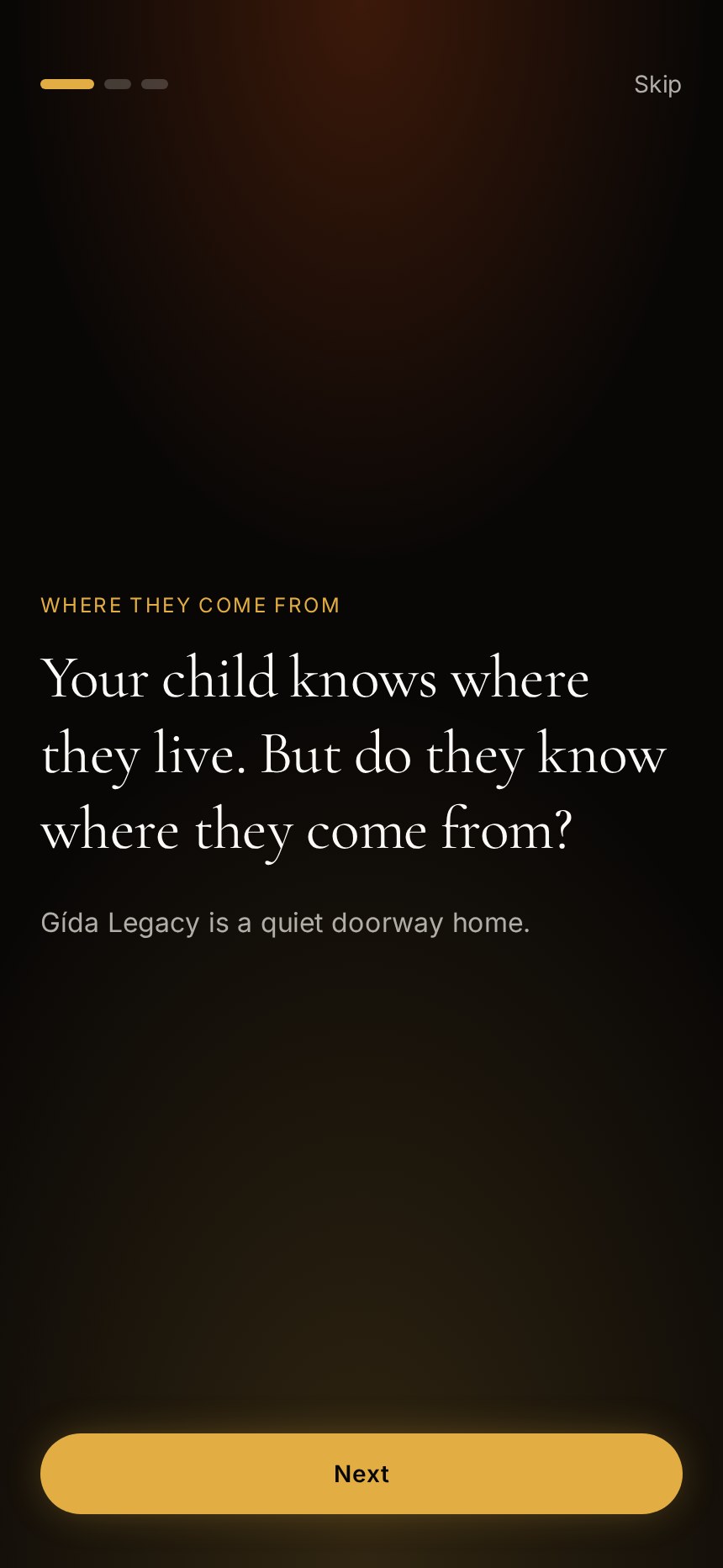
GÍDA Legacy
Research changed the product direction.
Early parent discovery showed that families were concerned about more than children learning vocabulary. The deeper problem was cultural connection. That insight helped move the proposition towards a broader digital cultural home.
Research → Insight → Product Strategy
View GÍDA Legacy case studyNAPSC
Market research shaped a focused entry vertical rather than a broad AI platform
ENACT AI
Market research shaped the product strategy.
Rather than assuming every organisation needs the same AI development path, discovery and market research informed which use cases, customers and entry industry the platform should focus on first.
Discovery → Use Case Fit → Product Strategy
View ENACT AI case study- User friction
- Product decision
- Workflow
Remote Edge
Research shaped product tradeoffs.
Understanding repetitive applications and the challenges international candidates face with supposedly remote roles informed decisions around application assistance, location eligibility, privacy and keeping users in control.
User Friction → Product Decision → Workflow
View Remote Edge case study05
How I Approach Product Questions
A practical research mindset
01
Discover
What problem are users actually experiencing?
I use research to understand behaviour, context and unmet needs before defining the solution.
02
Hypothesise
What do we believe, and what are we assuming?
I separate evidence from assumptions and identify what needs to be tested.
03
Analyse
What is the evidence telling us?
I combine quantitative and qualitative information to identify patterns and understand what may be driving them.
04
Measure
How will we know if the decision worked?
I think about success measures while defining the product, not only after something has been built.
06
Research & Analytical Toolkit
Software, methods and capabilities
Data & Analysis
- SPSS v29
- Microsoft Excel
Descriptive Statistics · Chi-square Testing · Logistic Regression · Data Cleaning · Data Interpretation
Research Methods
Research Design · Quantitative Research · Secondary Data Analysis · Literature Review · Evidence Synthesis · Critical Appraisal · Health Needs Assessment
Product Research
Customer Discovery · User Research · Survey Design · Problem Validation · Research Synthesis · Competitor Analysis · Hypothesis Development · Success Metrics
Microsoft 365
- Excel
- Word
- PowerPoint
- Teams
Excel Word PowerPoint Teams
Research didn't take me away from product. It shaped how I practise it.
Whether I'm analysing population data, speaking with customers or investigating why users behave a certain way, my approach starts in the same place: ask the right question, find the evidence, understand its limitations and use what I learn to make a better decision.
Explore My Product Work